


Photo Recovery on Windows
Photos are critical digital assets used for personal records, professional work, and business documentation. Accidental deletion of image files on Windows systems can result in significant data loss, especially when files are permanently removed using Shift + Delete or after emptying the Recycle Bin.
EdbMails Data Recovery Software enables secure recovery of deleted photo files from HDDs, SSDs, USB drives, and SD cards detected by Windows. The software performs a comprehensive scan of the storage device in read-only mode to locate recoverable image files without altering the original data.
As long as the deleted photo data has not been overwritten, you can view recoverable files and selectively restore the required files to a safe location. This step-by-step guide explains how to recover deleted photos on Windows using EdbMails.
Pre-requisites for Photo Recovery
Before beginning the photo recovery process, ensure the following:
- Install EdbMails Data Recovery Software on your computer.
- Purchase and activate the required license for full recovery.
- Ensure sufficient free space is available to save recovered photos.
- Avoid writing new data to the affected device to prevent overwriting deleted photo data.
Steps to Recover Deleted Photos on Windows
Follow the steps to recover your deleted photos safely using EdbMails.
- Download and install the EdbMails application on your computer.
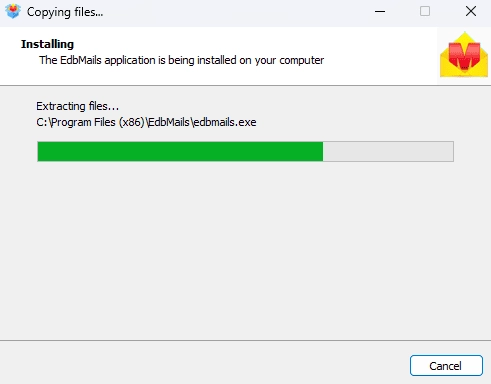
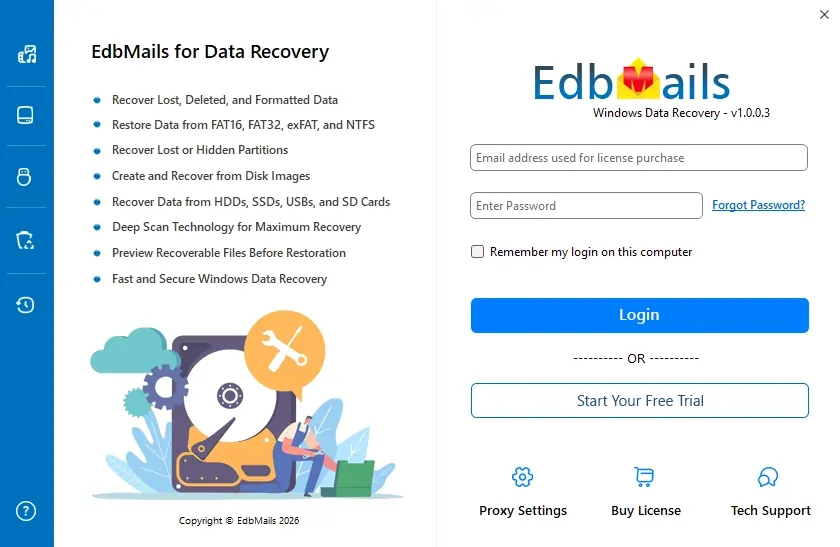
- Enter your email address and password to login. If you haven’t registered yet, click ‘Start Your Free Trial’ to explore the features.
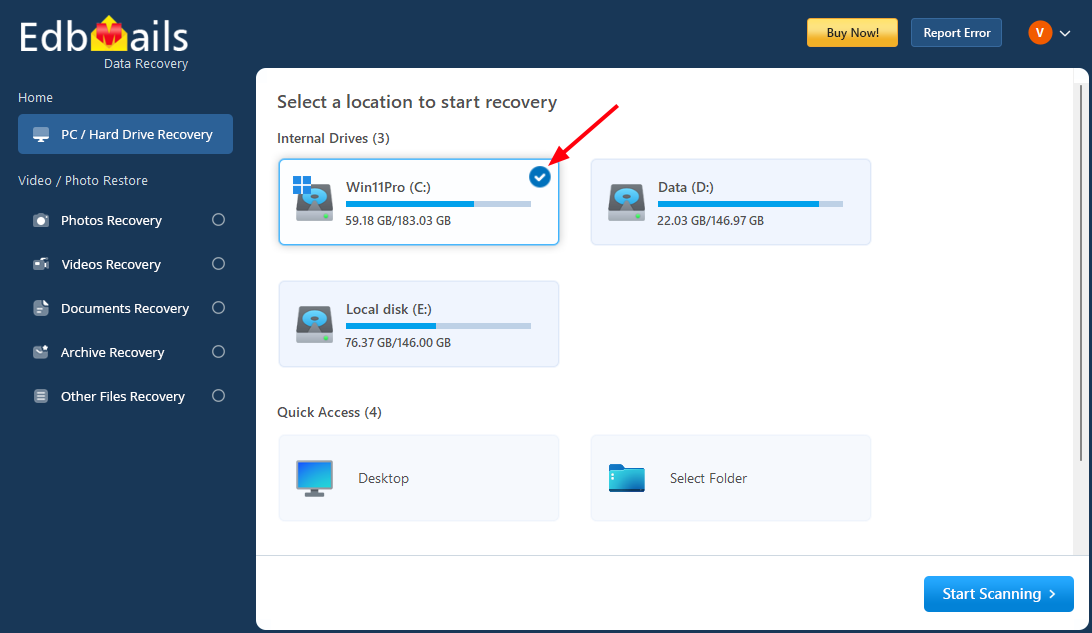
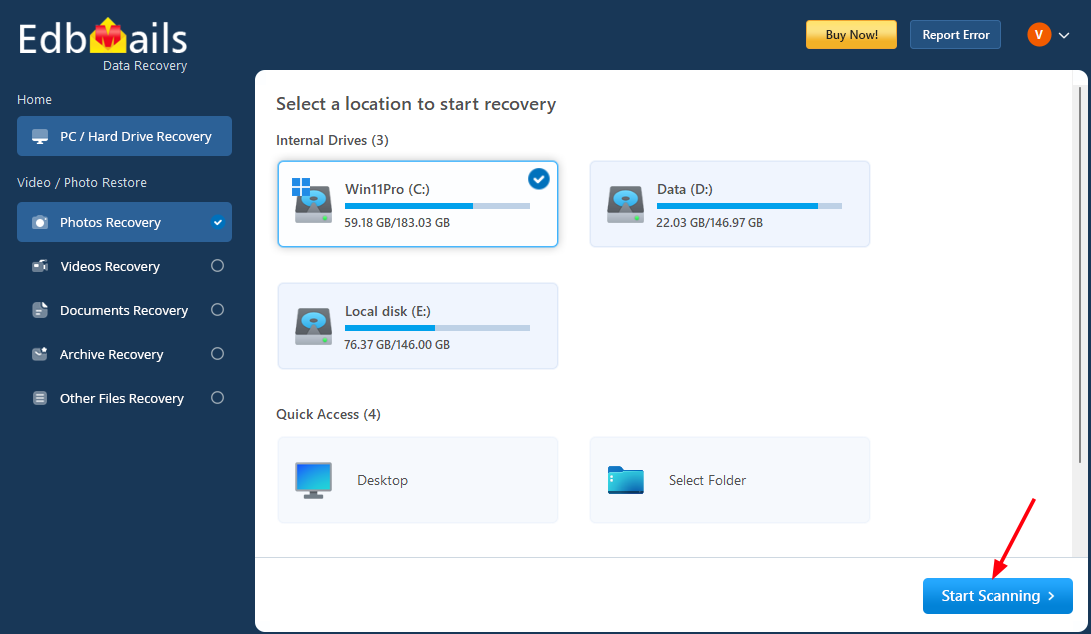
- Select the drive (HDD, SSD, USB, or SD card) from which you want to recover deleted photos.
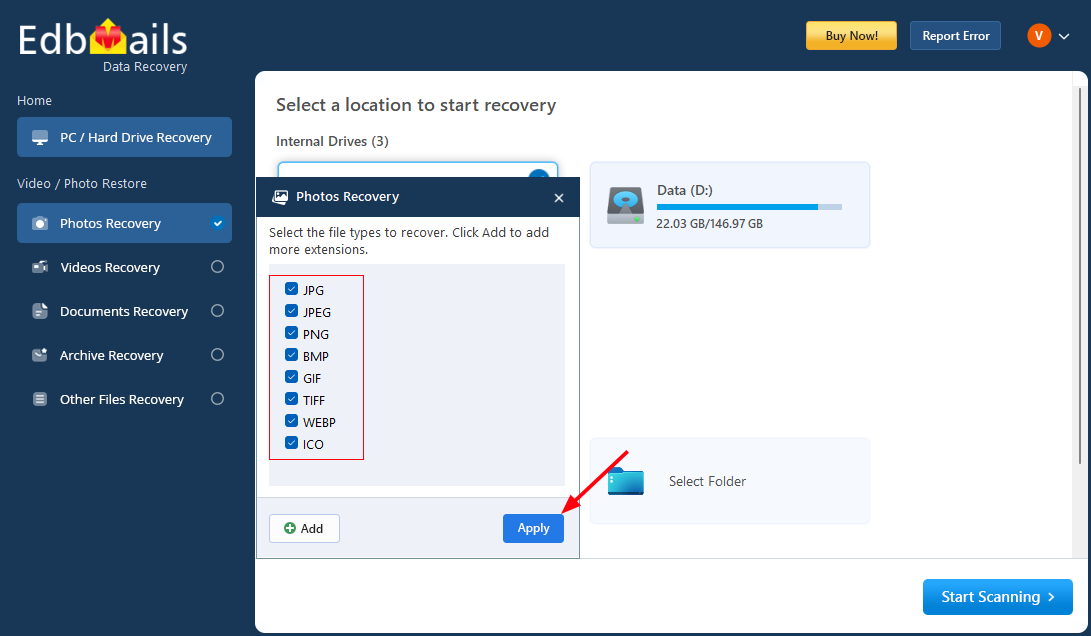
- Click ‘Photos Recovery’, select the file types you want to recover, and then click ‘Apply’.
Note: If you have additional file extensions, click the ‘Add’ button and enter the file type.
- Select the required folders that you want to recover.
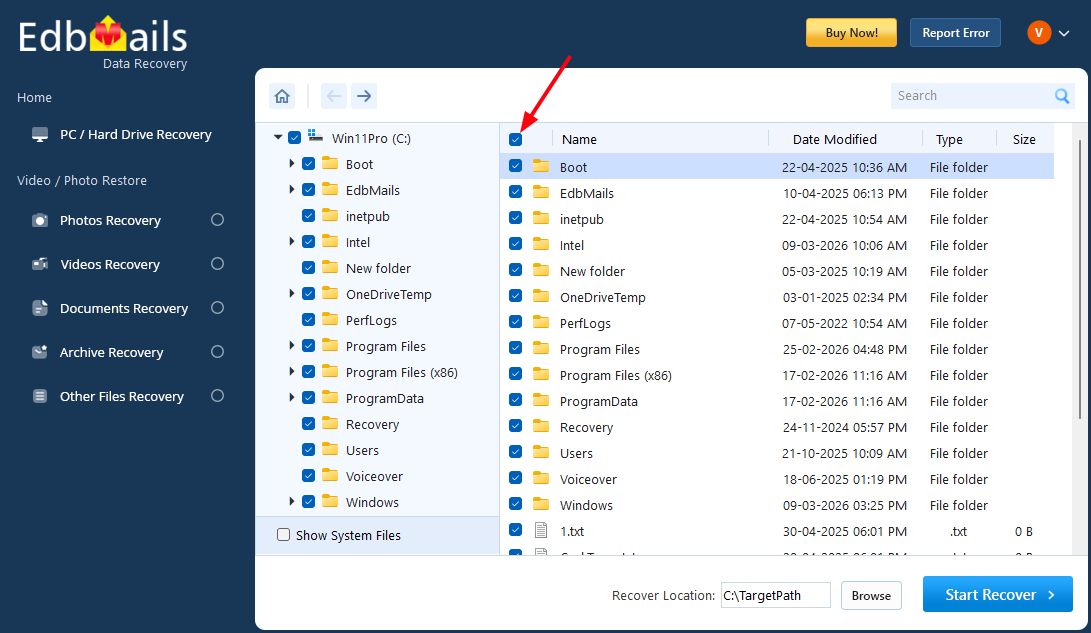
- Click the ‘Start Scanning’ button.
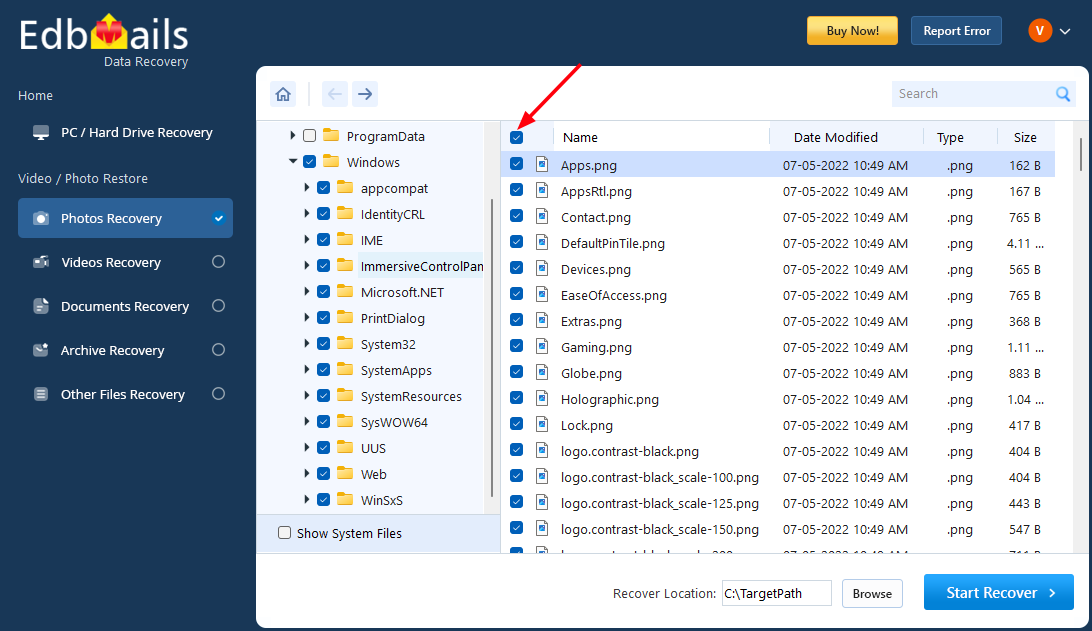
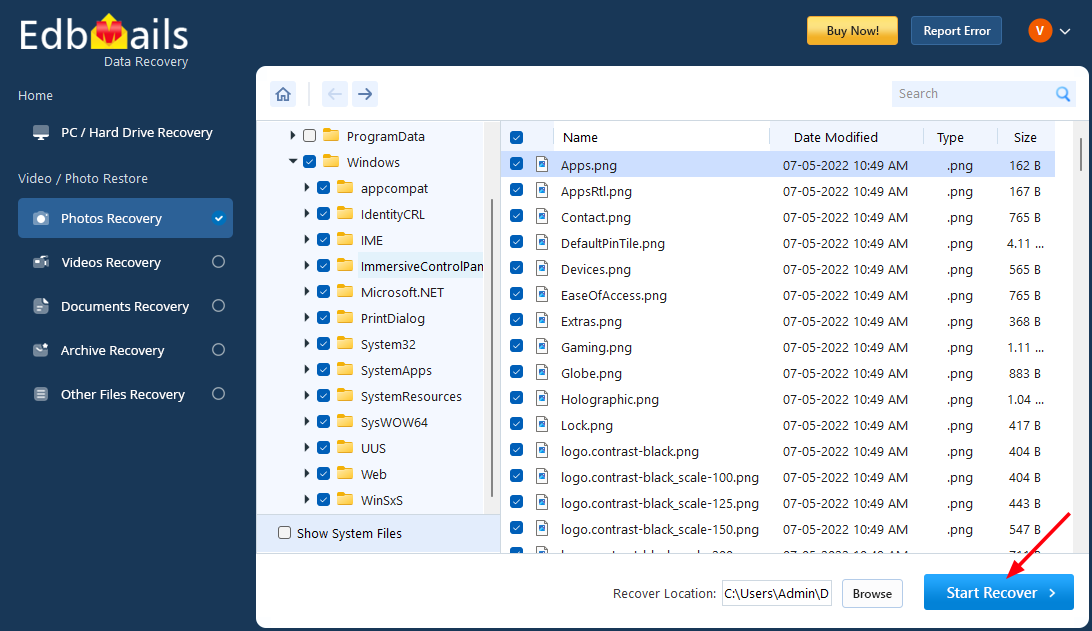
- Select the items you want to recover.
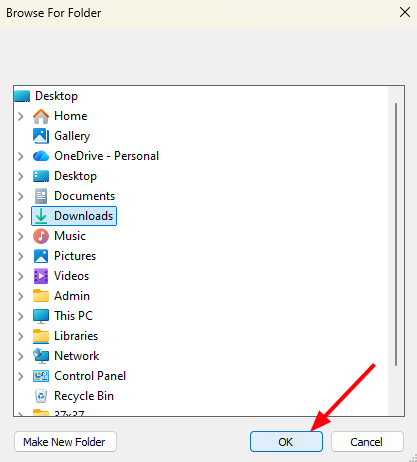
- Click the ‘Browse’ button to select the recovery location.
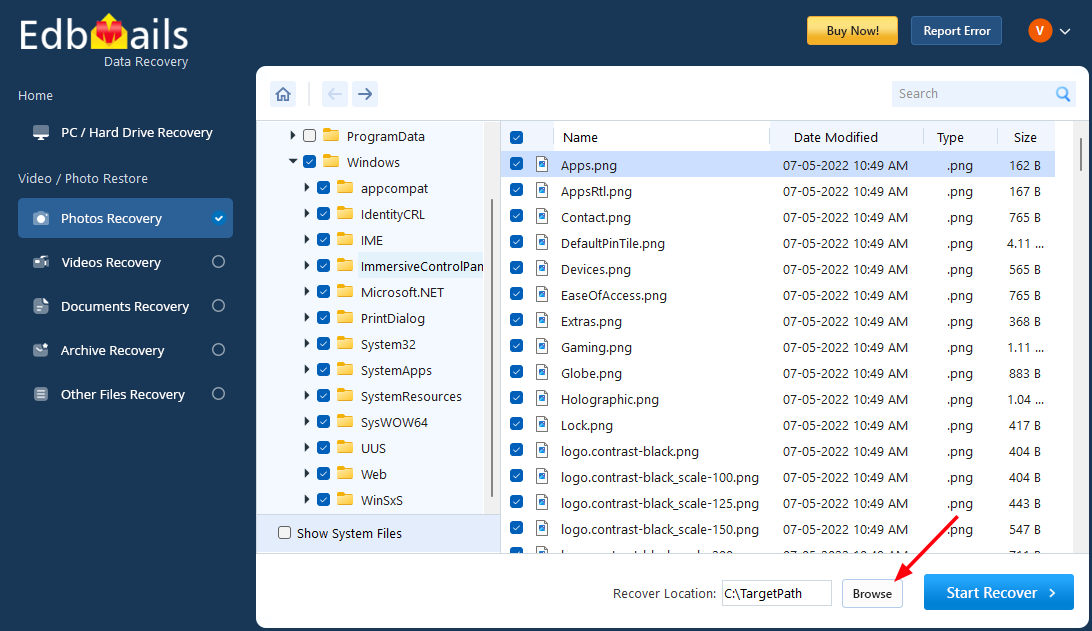
- Choose the desired location and click ‘OK’.
- Click the ‘Start Recover’ button.
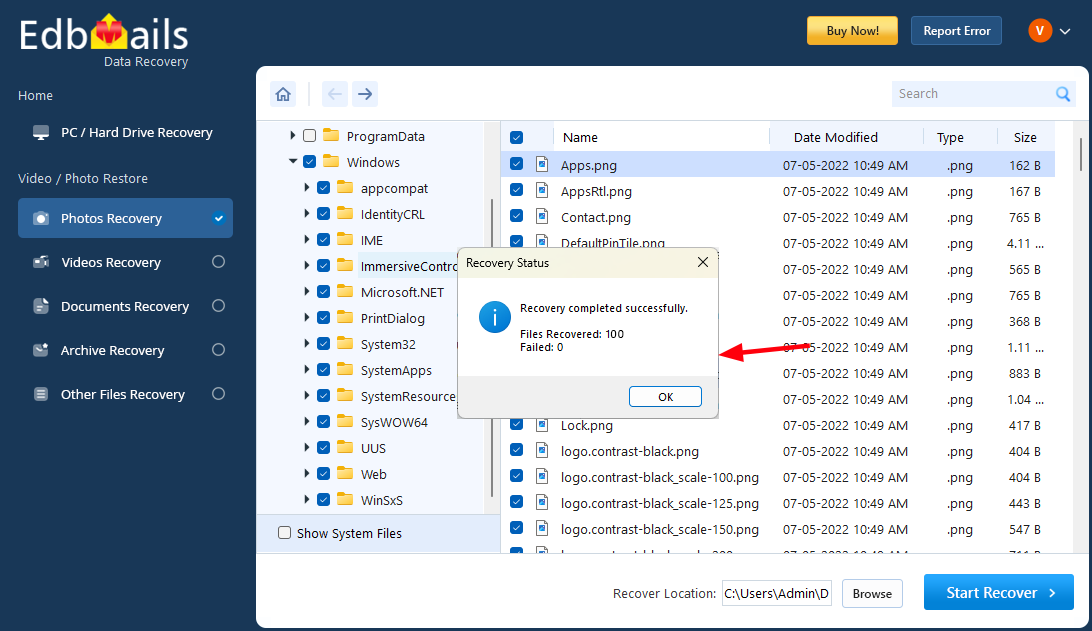
- Once all photos are recovered, a prompt will display the number of files recovered.
- Navigate to the recovery location to check the recovered photos.
- Download and install the EdbMails application on your computer.
Supported Photo File Formats
EdbMails Data Recovery Software supports recovery of widely used image file formats stored on Windows-based storage devices. The software scans selected drives and identifies recoverable photo files efficiently, regardless of how they were originally created or stored on the system.
The supported photo formats include:
- JPG / JPEG (.jpg, .jpeg) – Standard compressed image format commonly used for storing digital photographs.
- PNG (.png) – High-quality image format that supports lossless compression and transparency.
- BMP (.bmp) – Windows bitmap image format used for uncompressed graphics.
- GIF (.gif) – Image format that supports static and animated graphics.
- TIFF (.tif, .tiff) – High-resolution image format typically used for detailed image storage.
- WEBP (.webp) – Compressed image format stored on Windows systems.
- ICO (.ico) – Icon image format used within Windows environments.
During the scanning process, recoverable image files are automatically organized under the photo category, allowing you to quickly locate and preview the required files. This structured classification simplifies navigation, especially when scanning large storage volumes.
As long as the deleted image data has not been overwritten, the identified photo files can be previewed and restored safely to a different storage location.
Benefits of Using EdbMails Photo Recovery Software
- Recovers permanently deleted photos from Windows storage devices.
- Supports recovery from HDDs, SSDs, USB drives, and SD cards.
- Allows users to view recoverable photos before restoration.
- Enables selective recovery of required photos.
- Organizes recoverable photos into categories for easy navigation.
- Performs secure read-only scanning without modifying original data.
- Compatible with all major Windows versions.
- Simple and user-friendly interface for all levels of users.