


Recover Metadata and Attachments from OST Files
Every email contains more than the message; it contains critical information that provides context and credibility to the message. Email metadata includes headers, subject lines, sender and recipient information, date/time stamps, and CC/BCC fields, and attachments preserve the full context of each message. When an OST file is not accessible due to profile issues, corruption, or file-level damage, it becomes difficult to retrieve this data. In such cases, Outlook’s built-in export options are often limited and can miss important metadata or attachments, resulting in incomplete and unreliable backups.
To get over such limitations, EdbMails OST to PST Converter provides a complete solution to recover mailbox data from orphaned, encrypted, or damaged OST files. The tool maintains full metadata and attachments, original folder structure, formatting, and message integrity, thus exported PST files are fully compatible with Outlook.
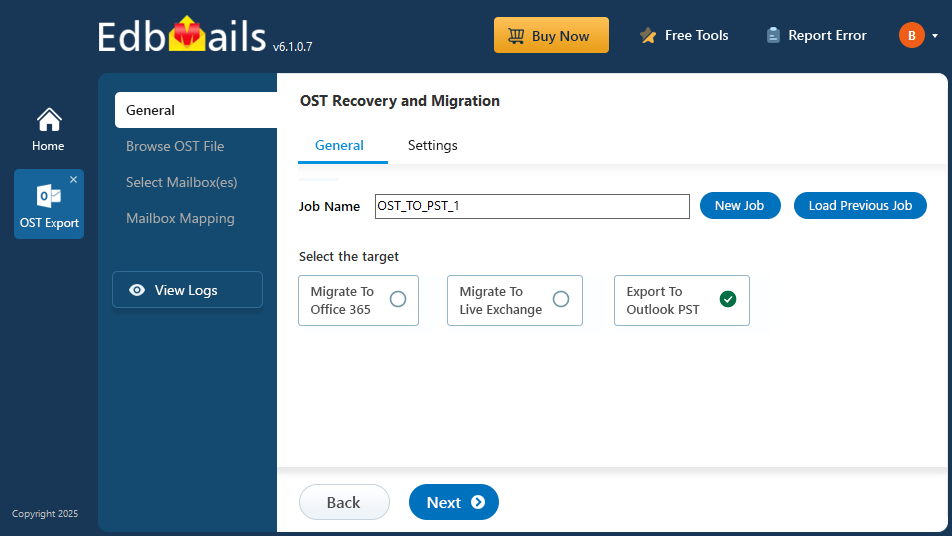
We’ll guide you through the recovery process step by step using EdbMails in the guide below. This guide will walk you through all the steps from loading your OST file and previewing its contents to applying filters and exporting selected items so that your data is restored accurately and ready for access or migration without any loss.
Common Uses of Metadata and Attachments in Emails
- Sender and Recipient Details: The metadata in the email contains important information such as the sender address, the recipient address, CC, BCC, and routing information. This information is very important to know who sent the email and to whom it has been sent, especially in business communication. When converting OST data to PST, EdbMails maintains complete sender and recipient metadata and does not lose any communication details.
- Compliance, verification, and legal requirements: Metadata and attachments are often needed for audits, compliance checks, and legal investigations. They help verify emails, timelines, and ownership of messages. EdbMails preserves original headers, timestamps, and attachments so that the exported PST files are compliant and can be used for legal review.
- Keeping Proper Email Records: Emails and attachments are considered official records. Information like sent time, received time, and message ID is useful when you want to see when a message was exchanged. EdbMails guarantees that all the metadata fields are accurately retained during OST to PST conversion for reliable record keeping.
- Advanced Search and Selective Export: Metadata makes it simple to locate emails with filters such as sender name, recipient address, subject, date, or attachment name. This can be especially useful for large mailboxes. EdbMails provides users the ability to search and export only the needed emails or folders by using selective export based on metadata.
- Spam Analysis: Email headers and metadata are key to separating legitimate emails and spam by determining the source and route of a message. EdbMails fully recovers email headers and metadata so that emails can be properly analyzed and traced after export.
EdbMails OST to PST converter tool recovers and exports all the metadata information from OST to PST, thus maintaining data consistency. You can save background images, attachments (with all extensions), appointments, and meeting schedules from inaccessible OST files and export them to PST. You no longer have to worry about data consistency and integrity with EdbMails.
How to convert OST to PST from any Outlook version?
- Use EdbMails OST to PST Converter, you can easily and quickly convert the OST files to PST irrespective of the Outlook versions.
- Supports all major versions of Outlook, including Outlook 2021, 2019, 2016, 2013, 2010, 2007, and 2003 to maintain data consistency during conversion.
- Whether it's emails, folder structure, calendar entries, or special characters, metadata, EdbMails preserves everything. There will be no data loss in the entire migration process.
- EdbMails helps you to get a high-end conversion by converting old Outlook OST versions into a straightforward process without demanding any PowerShell scripting and technical expertise.
- You can also easily filter and choose the emails and items that you want to extract, allowing you to fully manage your recovered data.
Steps to extract metadata and attachments from OST to PST
Step 1: Download and install EdbMails OST to PST converter tool
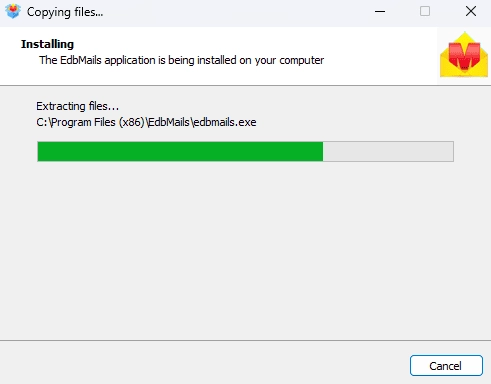
- Download and install the EdbMails application on any Windows-based computer.
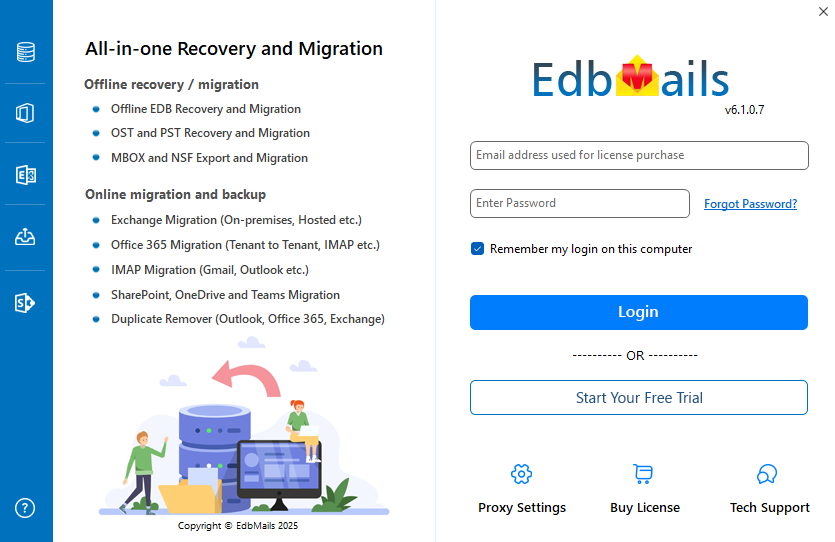
- Open the EdbMails application
- Enter your email address and password, then click ‘Login’. If you don’t have an account, click ‘Start Your Free Trial’ to continue using the trial version.Note: The Free Trial version lets you explore the software features and export up to 30 items from each and every folder. To unlock full functionality, you need to purchase a valid license from the EdbMails website.
Click here to purchase the license from the EdbMails website.
After completing the purchase, close and relaunch the EdbMails application, then login using the same email address and password used during the purchase to activate your license.
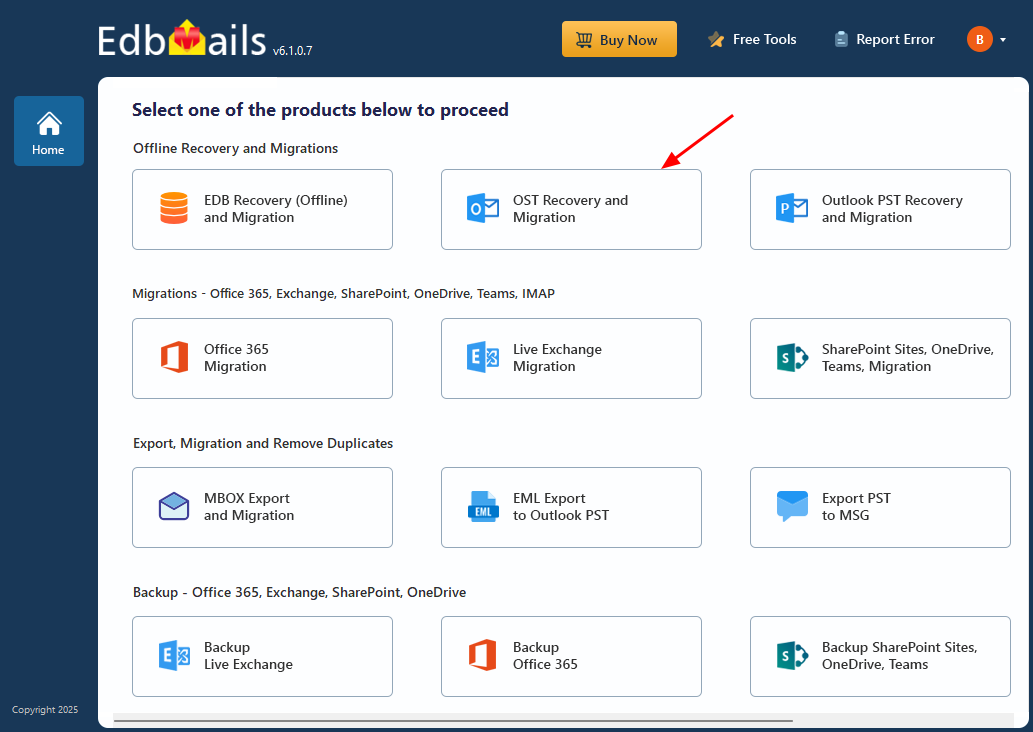
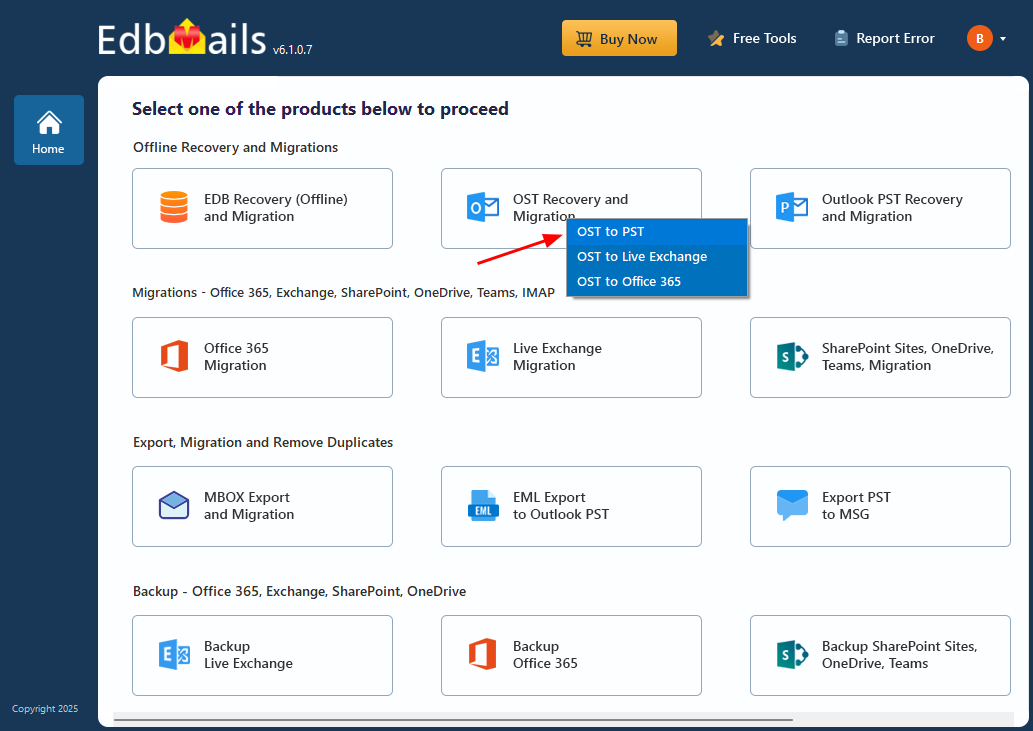
- Select ‘OST Recovery and Migration’.
- Select ‘OST to PST’.
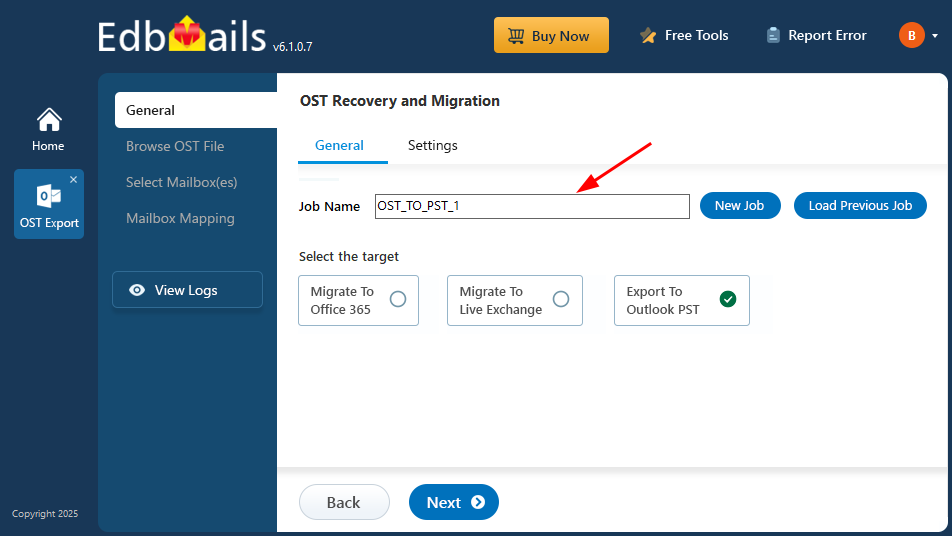
- You can retain the default job name or click the ‘New Job’ button to change the job name.
- Then click 'Next' to continue.
Step 2: Select the OST file containing your mailbox data
- Click ‘Browse for OST file'.
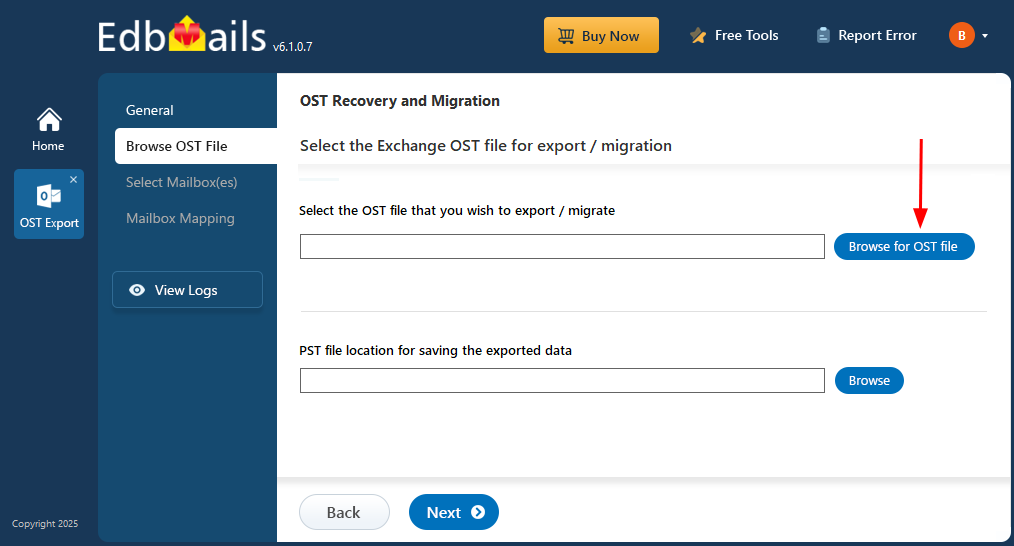
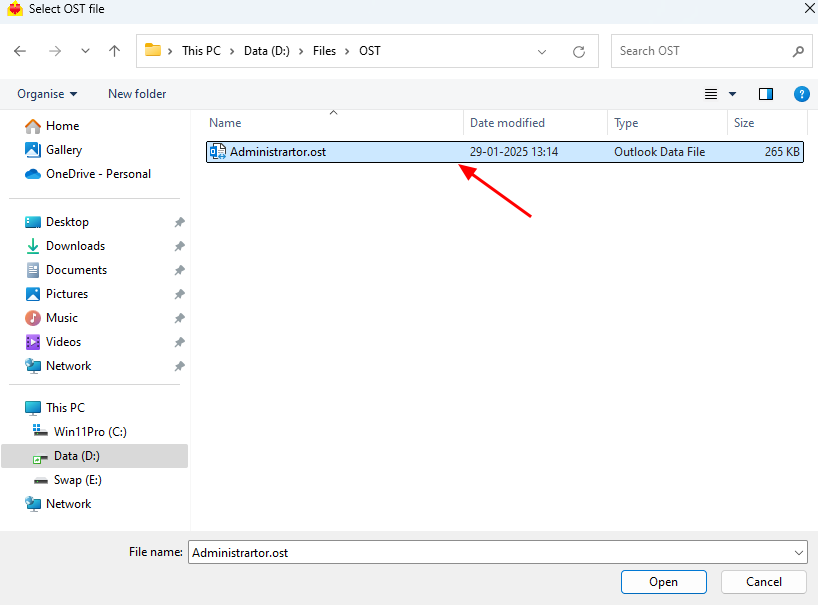
- Select the offline OST file from your local drive, then click the ‘Next’ button to continue. You can also share the OST file on a network with read and write permissions assigned.
- Click ‘Browse’.
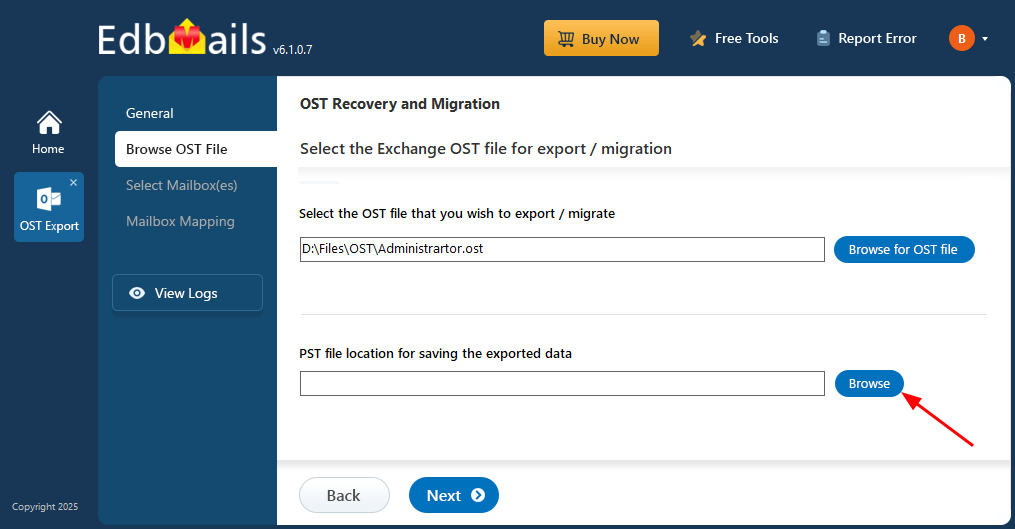
- Choose the destination folder for saving the exported PST files and make sure the drive has sufficient free space to accommodate the data.
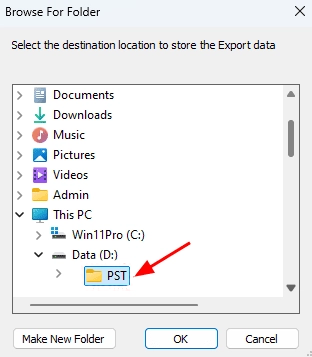
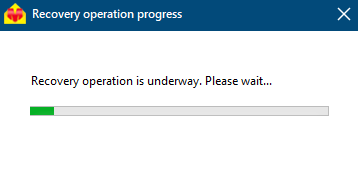
- Even if the OST file is damaged/corrupted, EdbMails scans the offline OST file and recovers mailbox data. In this process the tool scans the file structure and content to extract emails and other mailbox items. This will take some time, depending on the size of the file and how corrupt it is. Wait for the scan to finish to make sure it is fully recovered.
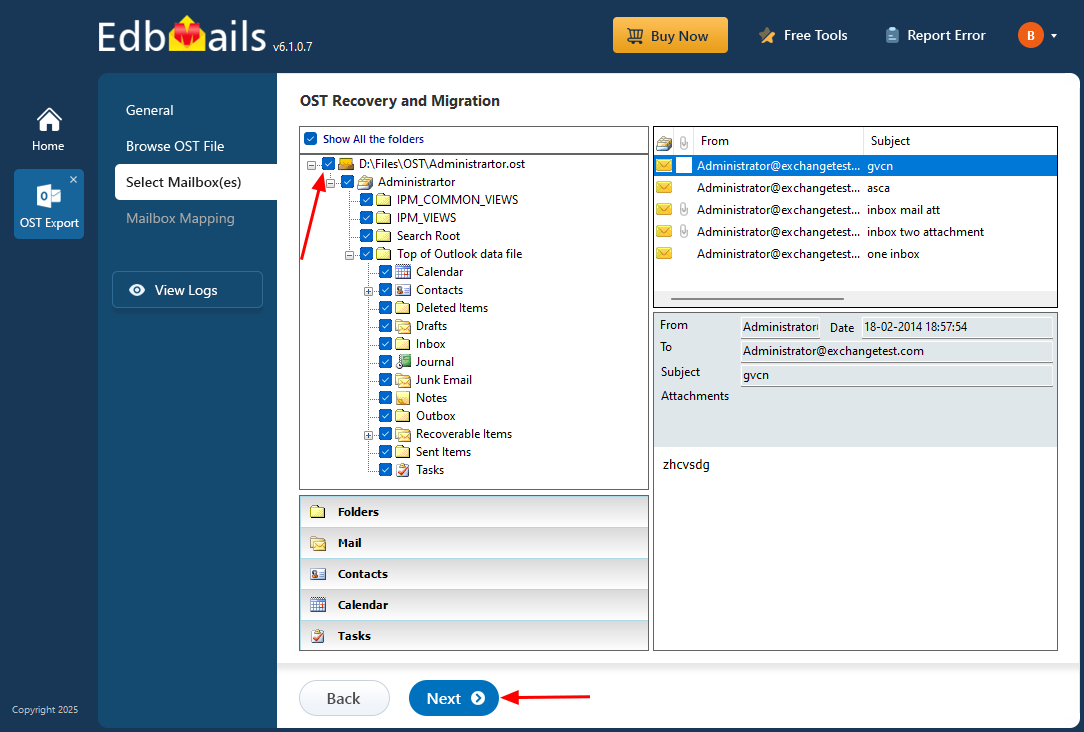
- After the process of recovery is over, you can view the data of the OST file in the application interface with all the folder and subfolder structure. You can open any folder or sub-folder to see what it contains. You can choose a folder, for example, Emails, Contacts, Notes, Tasks, or Calendar. The app will then display all of the items in the folder and a detailed preview of the selected item on the right-hand side of the interface. Using the EdbMails OST to PST Converter, you can access OST files without Outlook .
Step 3: Preview and select the mailbox
- Select the required mailboxes/folders and click the ‘Next’ button.
EdbMails allows you to apply filters to customize your export process. For example, you can use date filters to export items within a specific date range. To do this, go to the ‘General’ tab on the left side and then click the ‘Settings’ tab at the top right.
Click here to learn more about setting date filters for OST to PST conversion.
Step 4: Export the rebuilt OST file to PST
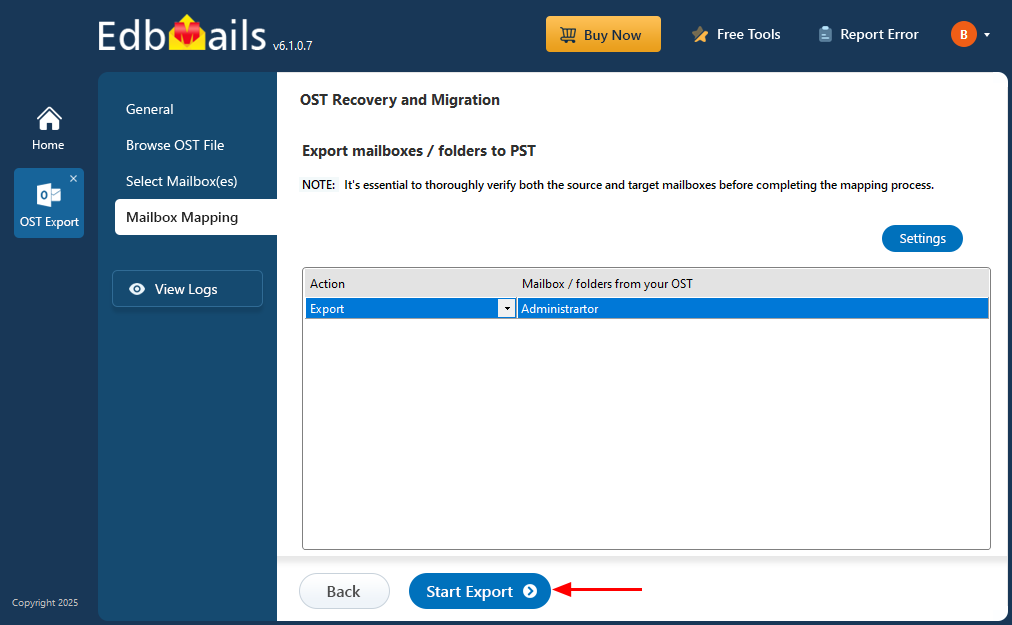
- EdbMails OST to PST converter gives fast and accurate conversion of offline OST files to PST format. Check the mailboxes and folders selected for the export operation. Ensure the ‘Action’ is set to ‘Export’ and then click on the ‘Start Export’ button to initiate the export process.
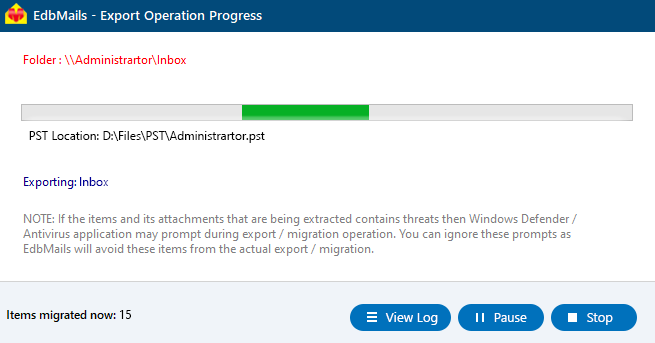
- The export is in progress, and the status bar shows the progress. The interface displays the mailbox and folder to be exported, the location of the destination PST file, and the number of items exported successfully. After the export is complete, EdbMails will show a message that the operation has completed.
- When the export is done, you can import the PST file back into Outlook and open up all the attachments as usual. With EdbMails, you can also extract individual mail items and save them as HTML, EML, or MHT for easy viewing and archiving.
- Download and install the EdbMails application on any Windows-based computer.